
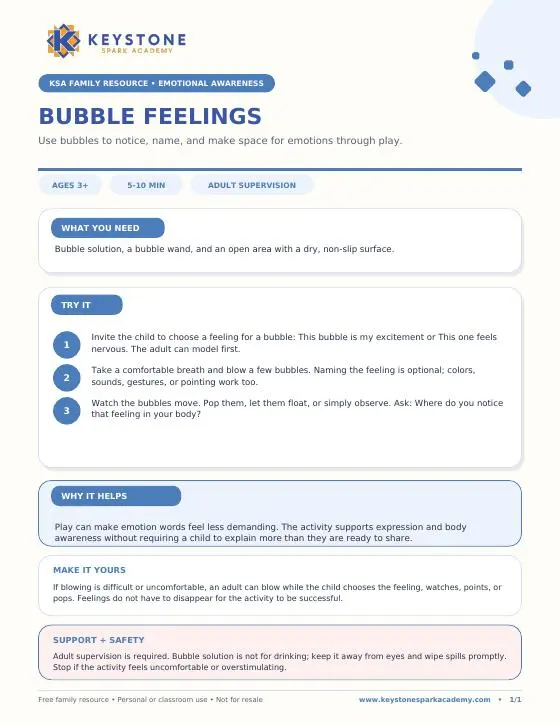
Activity instructions
What you need
Bubble solution, a bubble wand, and an open area with a dry, non-slip surface.
How to do the activity
- Invite the child to choose a feeling for a bubble, such as: This bubble is my excitement, or: This one feels nervous. The adult can model first.
- Take a comfortable breath and blow a few bubbles. Naming the feeling is optional. Colors, sounds, gestures, or pointing work too.
- Watch the bubbles move. Pop them, let them float, or simply observe. Ask: Where do you notice that feeling in your body?
Why it may help
Play can make emotion words feel less demanding. The activity supports expression and body awareness without requiring a child to explain more than they are ready to share.
Adaptation and communication options
If blowing is difficult or uncomfortable, an adult can blow while the child chooses the feeling, watches, points, or pops. Feelings do not have to disappear for the activity to be successful.