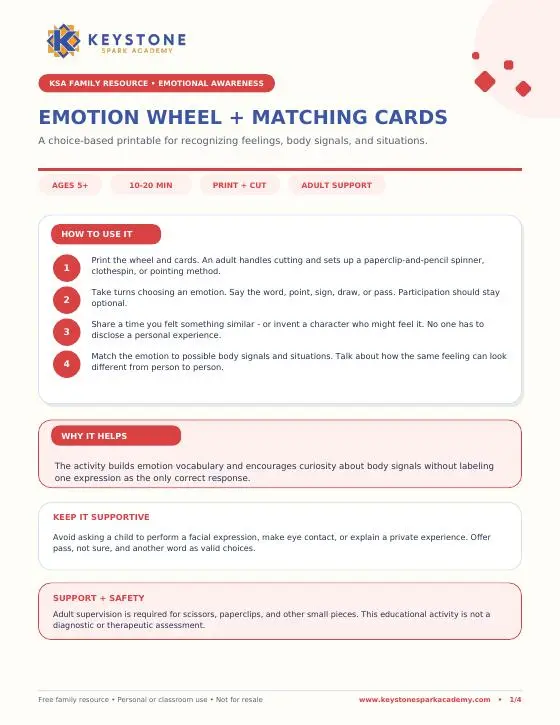
Emotion Wheel + Matching Cards
Build emotion vocabulary while exploring how feelings, body signals, and situations can look different from person to person.

Read every activity in an accessible web format, download printable companions, and save useful resources on this device so they are easier to find again.
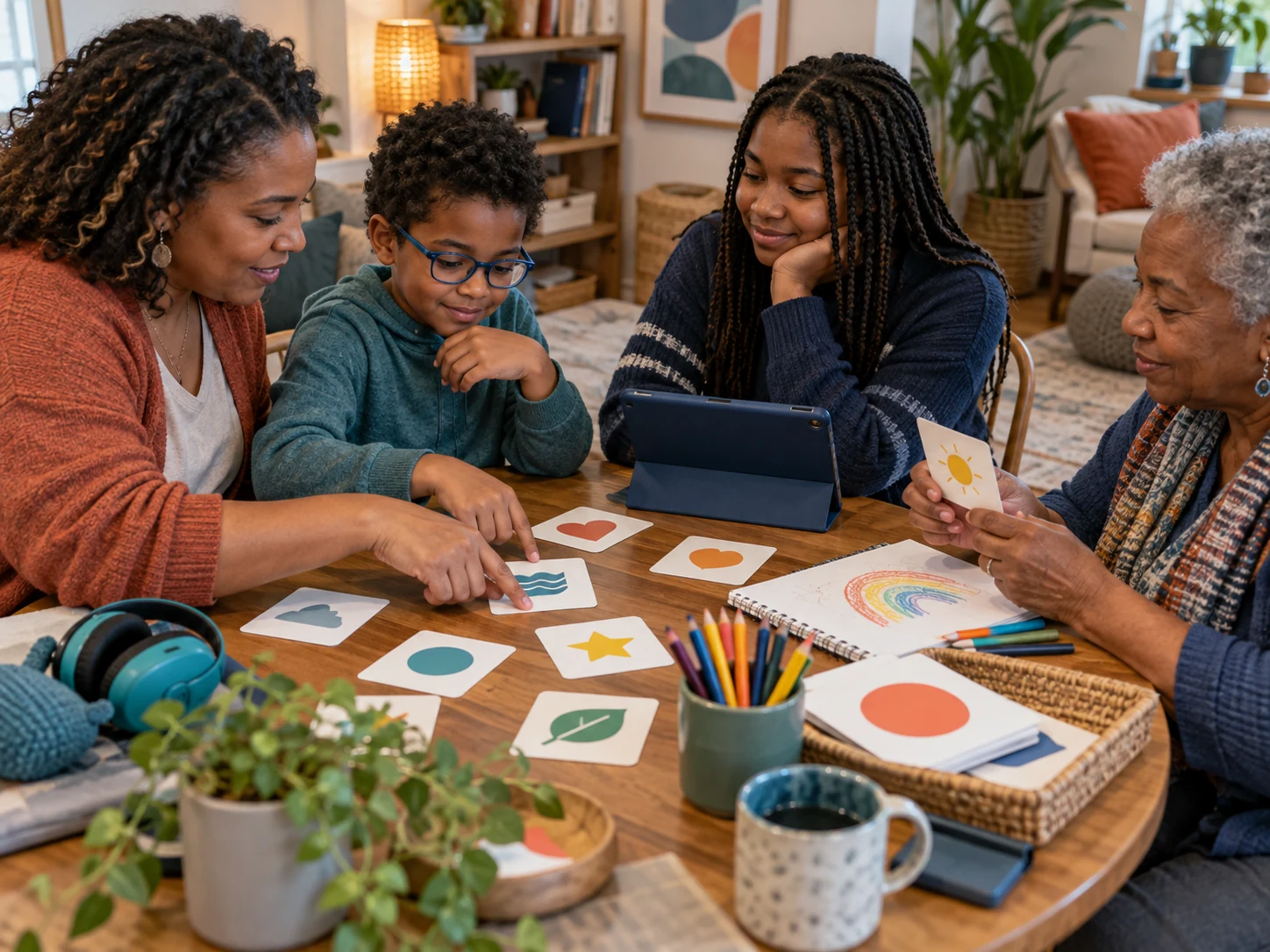
This growing library includes choice-based family activities, communication tools, advocacy planners, and inclusive-hosting guidance. Each activity now includes semantic web instructions with structured headings, lists, adaptations, safety information, and written descriptions of visual templates.
Free PDF downloads request your name and email the first time. After that, downloads remain available for 60 days on the same browser and device. Newsletter enrollment is always a separate, optional choice.
These materials provide general educational information. They are not legal, medical, mental health, diagnostic, or individualized educational advice.
Build emotion vocabulary while exploring how feelings, body signals, and situations can look different from person to person.
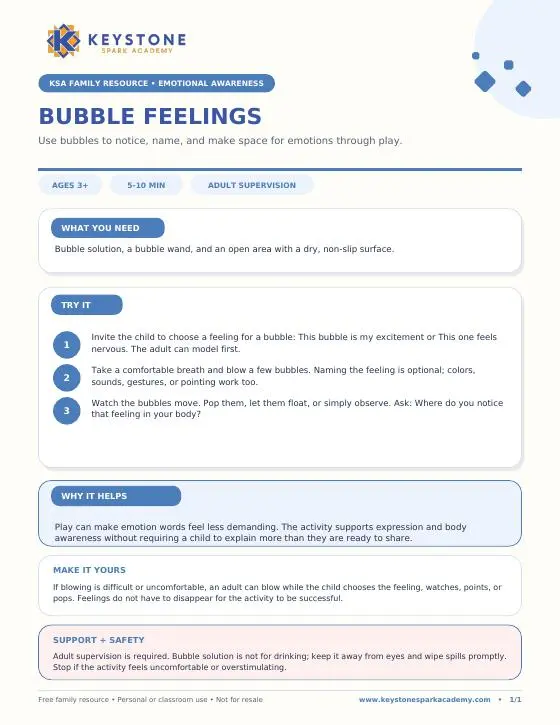
Use playful bubbles to notice, name, and make space for emotions without requiring a child to explain more than they are ready to share.
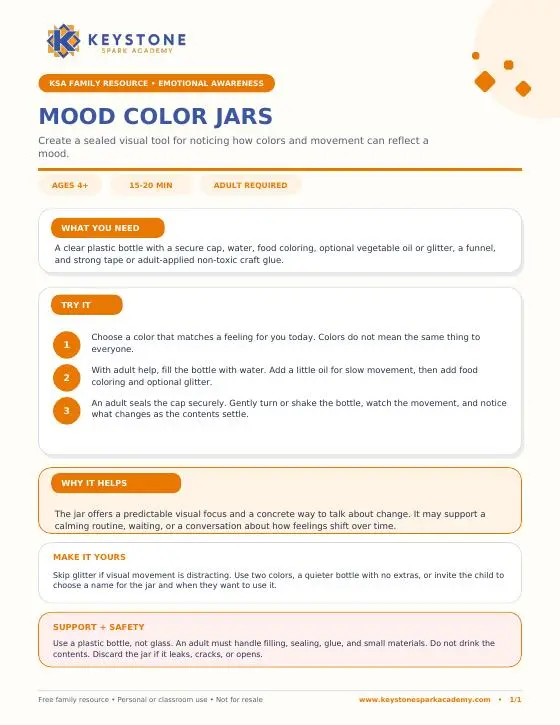
Create a safely sealed visual tool for noticing how personally chosen colors and movement can reflect a mood.
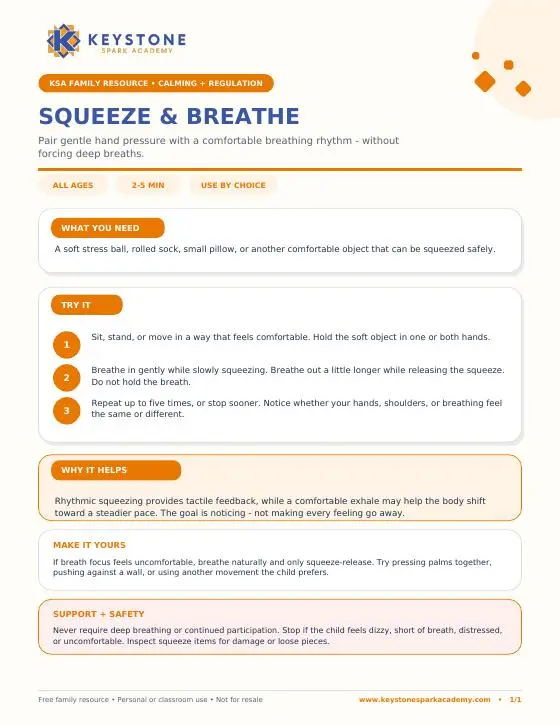
Pair gentle hand pressure with a comfortable breathing rhythm, including alternatives for people who do not find breath focus helpful.
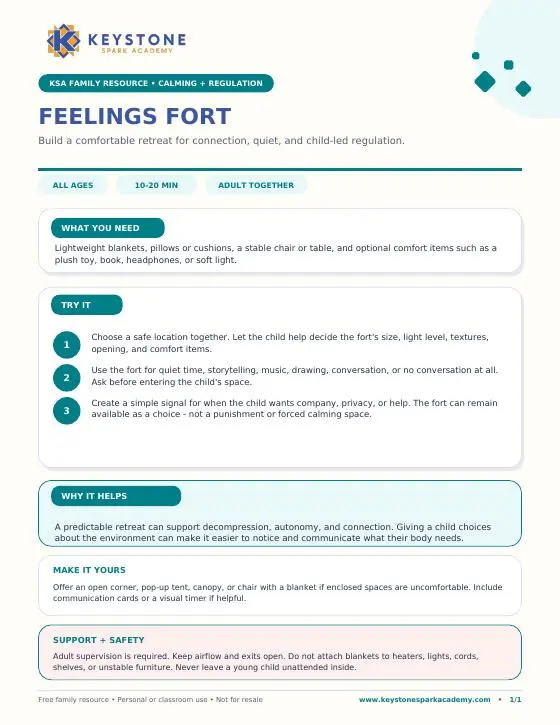
Build a safe, child-shaped retreat for connection, quiet, decompression, or privacy without making calming a punishment.
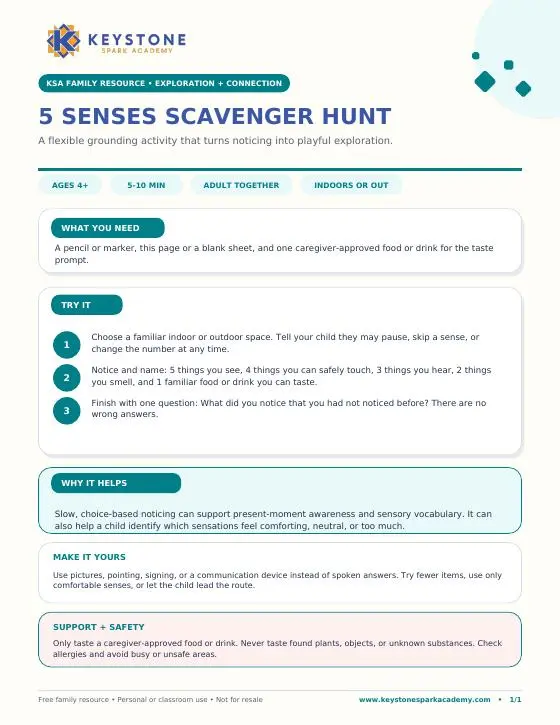
Turn noticing into sensory-aware exploration with permission to skip, adapt, point, sign, or use another communication method.
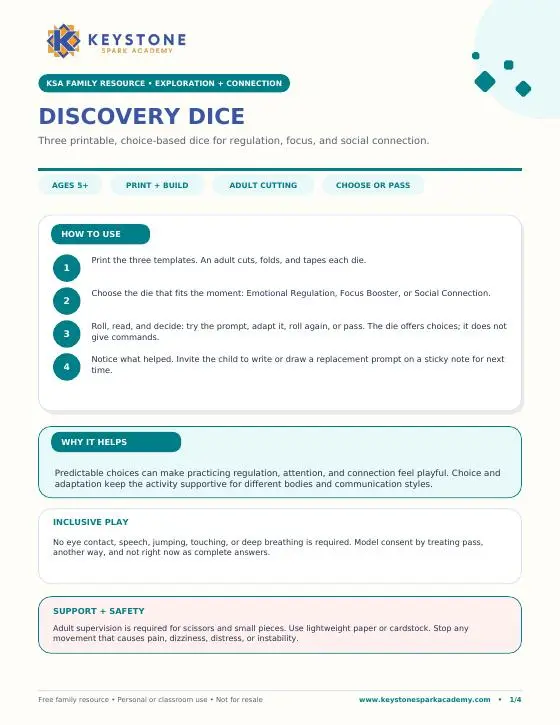
Build three printable dice with choice-based prompts for emotional regulation, accessible focus, and social connection.
These guides open as accessible webpages and can also be printed or saved as PDFs through your browser.
Organize priorities, questions, examples, requested supports, and follow-up before a school, provider, or support meeting.
Open the accessible guideReview communication, physical access, sensory considerations, participation, safety, and hospitality before hosting an experience.
Open the accessible guideUse clear questions to learn how a program approaches access, staff preparation, communication, cost, participation, and support.
Open the accessible guideSave resources you want to revisit. This list remains only in this browser and does not create an account or sync to another device.
No resources have been saved on this device yet.