
Activity instructions
What you need
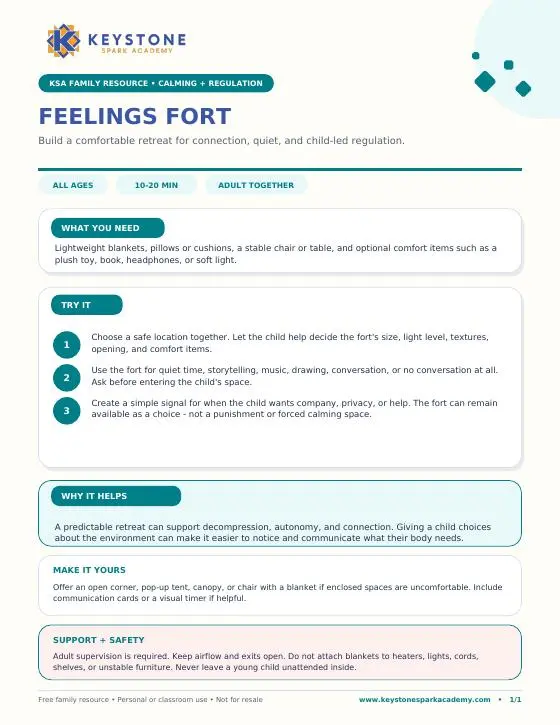
Lightweight blankets, pillows or cushions, a stable chair or table, and optional comfort items such as a plush toy, book, headphones, or soft light.
How to do the activity
- Choose a safe location together. Let the child help decide the fort's size, light level, textures, opening, and comfort items.
- Use the fort for quiet time, storytelling, music, drawing, conversation, or no conversation at all. Ask before entering the child's space.
- Create a simple signal for when the child wants company, privacy, or help. The fort can remain available as a choice, not a punishment or forced calming space.
Why it may help
A predictable retreat can support decompression, autonomy, and connection. Giving a child choices about the environment can make it easier to notice and communicate what their body needs.
Adaptation and communication options
Offer an open corner, pop-up tent, canopy, or chair with a blanket if enclosed spaces are uncomfortable. Include communication cards or a visual timer if helpful.